

How Often Should You Clean Your Pool in Spring? (April Guide for Texas Homeowners)
April in Texas feels like the real kickoff to pool season. The days grow warmer, the kids start begging for swims, and backyard gatherings pick up. But along with that comes more debris, thick clouds of North Texas pollen from oaks and pecans, and heavier weekend use. Suddenly, what worked in March doesn’t quite cut it anymore.
This is exactly why how often to clean pool matters more in spring than almost any other time. Warmer water speeds up everything—chemical changes, algae growth, and how fast debris breaks down. A solid pool cleaning schedule now sets the tone for the whole season and helps you avoid turning a small haze into a major headache. Let’s talk about what frequency actually looks like for Texas homeowners right now.
Weekly vs Bi-Weekly Cleaning
In April, most pools around Dallas do best with weekly cleaning rather than stretching it to every other week. The reason is simple: conditions change fast. Pollen coats the surface daily, rain can dilute chemicals overnight, and even light use introduces oils and lotions that affect water balance.
Weekly service keeps circulation strong, sanitizer levels steady, and debris from building up to the point where it clogs filters or feeds early algae. Bi-weekly might work fine for a lightly used, well-covered pool in quieter months, but in spring it often leaves gaps where small issues snowball. Many homeowners who try stretching the schedule in April end up needing extra shock treatments or deep cleans later—costing more time and money in the long run.
If your pool sees regular weekend traffic or sits under trees, weekly is usually the sweet spot for staying ahead without constant DIY fixes.
What Happens If You Skip Weeks
Skipping a week or two in April might not seem like a big deal at first—until the water starts looking a little off. Chemical imbalance creeps in quickly as temperatures rise. pH can drift, chlorine demand increases, and alkalinity swings with rain or heavy bather load. Before long, you’re dealing with cloudy water or that faint slippery feel on the walls that signals early trouble.
Algae risk goes up too. Microscopic algae love the warming water and extra nutrients from pollen. A missed week gives it just enough time to get a foothold, turning into a full bloom that shuts down swimming for days while you shock and brush everything back in line. We’ve seen plenty of pools go from mostly clear to frustratingly hazy in just 10–14 days when maintenance lapses during this transitional month.
The bottom line? Those skipped weeks often lead to reactive work—extra chemicals, longer filter run times, and more effort—rather than the steady enjoyment you want.
Impact of Trees, Pets, and Weather
North Texas yards bring their own unique challenges in April. Mature trees drop heavy pollen that turns the water surface yellow and loads up skimmer baskets fast. Windy days blow in extra dust and fine debris, while spring storms can dump rain that dilutes chemicals and stirs up sediment.
Pets add another layer—dogs jumping in carry dirt and hair, and their play kicks up more material from the bottom. Even light family use means more sunscreen, body oils, and leaves tracked in from the yard. Combine all that with our unpredictable weather—cool fronts one day, 80-degree heat the next—and you can see why a relaxed cleaning schedule from winter doesn’t hold up.
These local factors mean your spring pool maintenance Texas routine needs to account for faster debris accumulation and quicker chemical shifts than in calmer seasons or different parts of the country.
What Professionals Do Weekly
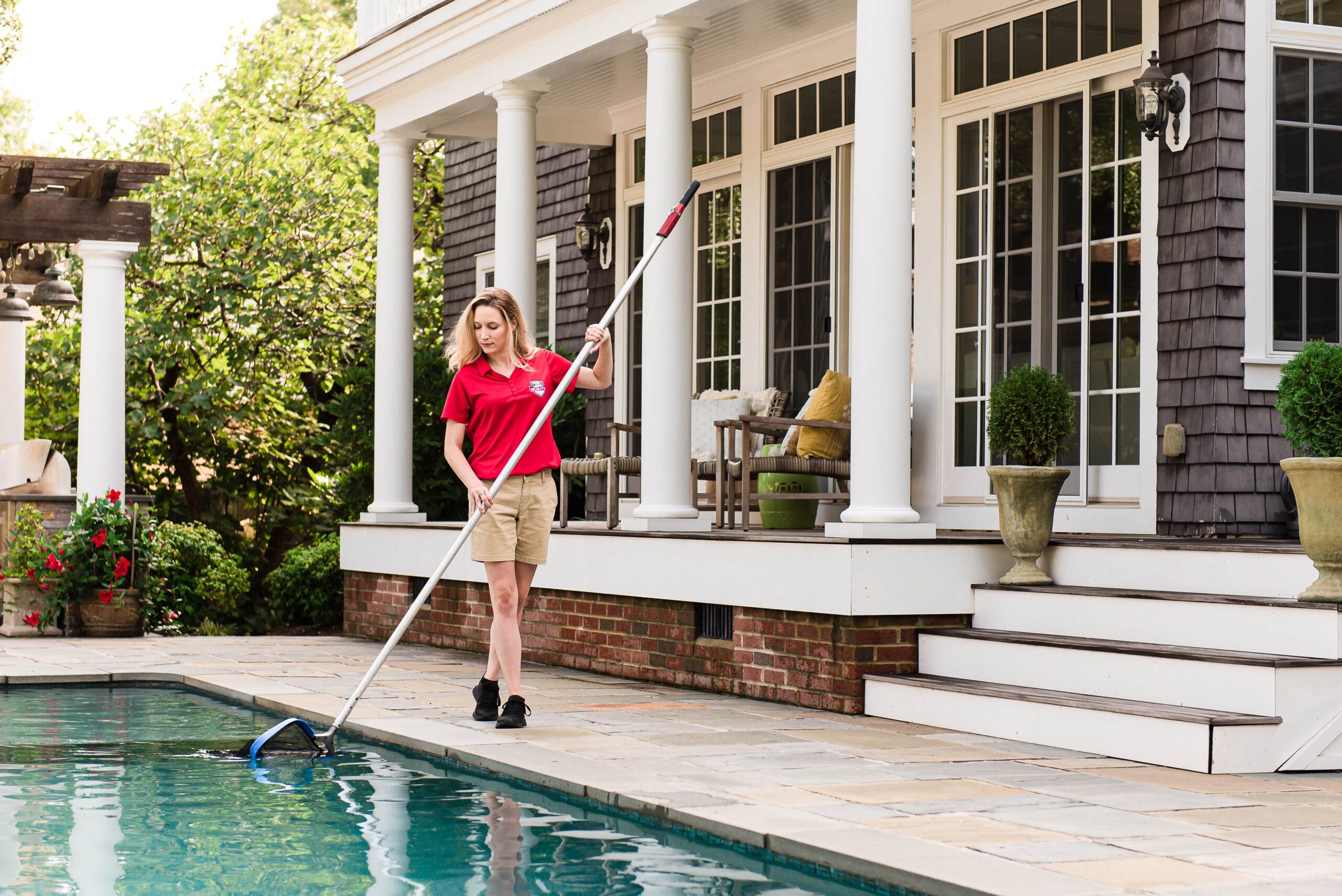
A good weekly pool service goes well beyond a quick skim and vacuum. Technicians typically test water chemistry on every visit—checking chlorine, pH, alkalinity, and calcium hardness—and make small, precise adjustments before anything drifts too far. They empty skimmer and pump baskets, brush walls and steps to prevent algae attachment, and remove debris before it breaks down and clouds the water.
They also monitor filtration and circulation, backwash or clean filters as needed, and look for early signs of equipment strain or developing issues. This consistent monitoring and balancing keeps the pool stable even as pollen counts spike or usage increases. Instead of reacting after the water turns hazy, weekly visits focus on prevention—saving you from big corrective treatments later.
For busy Texas families, that reliability means more weekends spent relaxing by clear water instead of troubleshooting it.
Consistency is the difference between clear and cloudy.
April is when habits formed now pay off all summer long. A thoughtful pool cleaning schedule—especially leaning toward weekly during this high-debris, warming period—helps you stay ahead of the pollen, weather swings, and increased use that define Texas springs.
If managing the details feels overwhelming or you simply want peace of mind, professional weekly pool service can make all the difference. Our team knows the unique challenges North Texas pools face in April and would be happy to help keep your water sparkling.
Give us a call at 469-352-9191 today. Let’s set up a schedule that fits your pool and your lifestyle—so you can focus on enjoying the season instead of chasing clarity.