

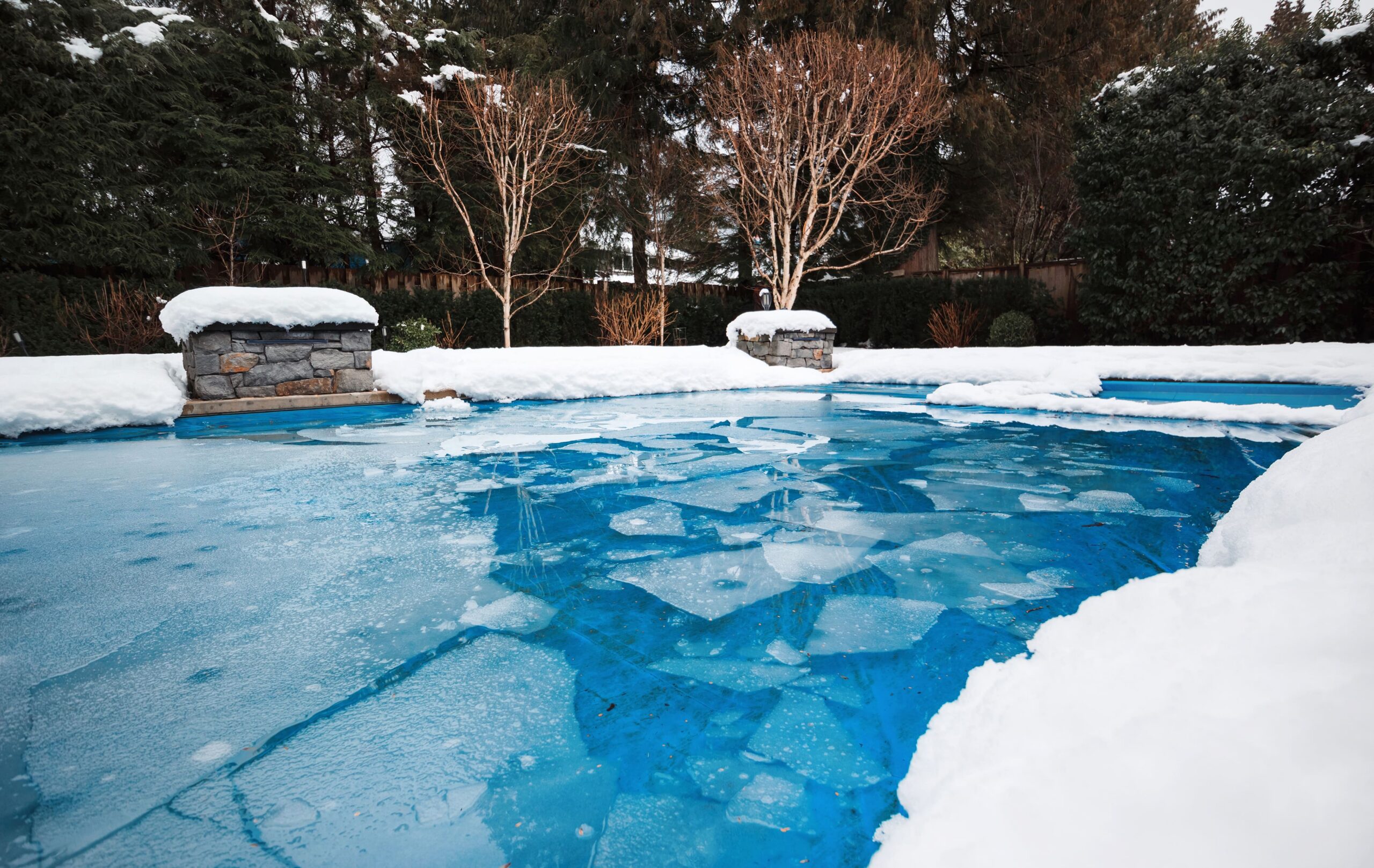
Protecting Your North Texas Pool from Sudden Freezes: A Complete Professional Guide
I’ve been servicing pools in the Dallas–Fort Worth metroplex for more than fifteen years, and I can promise you this: the most expensive phone call a pool owner will ever make in Texas happens between midnight and 5 a.m. on the first night the temperature drops below 25 °F. The conversation is always the same—panic, then disbelief, then the quiet realization that the backyard oasis they enjoyed in September is now an insurance claim.
North Texas doesn’t have “winter.” We have occasional arctic outbreaks separated by weeks of spring-like weather. That unpredictability is exactly why freeze damage here is so severe and so common. A 65- or 70-degree day keeps equipment warm and pliable; a sudden 18-degree night with wind makes plastic brittle in hours. The rapid temperature swing—not just the cold itself—is what splits pipes, cracks pump housings, and destroys heat exchangers faster than almost anywhere else in the country.
After the February 2021 storm alone, our company replaced more than 400 pumps and repaired over 600 individual plumbing leaks in a single six-week period. Almost every one of those failures could have been prevented with the steps I’m laying out below. This is the same checklist my senior technicians use on multi-million-dollar properties and the same advice we give every residential client from Fairview to Little Elm.
The Science in Plain English
Liquid water that turns to ice expands by approximately 9% in volume. In an open pool, that’s not a problem—the surface just pushes up a little. Inside a closed section of PVC, a pump volute, a filter tank, or a gas heater manifold, that 9 % has nowhere to go. The result is hydraulic pressure that can exceed 500–600 psi in seconds, far beyond what standard Schedule 40 PVC or ABS is designed to contain when cold and brittle. The failure is often explosive. I’ve seen pump housings split completely in half and filter tanks with sides bowed out like a balloon.
Principle #1: If the Water Is Moving, It’s Almost Impossible to Freeze
Moving water can remain liquid down to the low 20s and sometimes lower if the flow is strong enough. This single fact is why continuous circulation is the gold standard of protection in fluctuating climates like ours.
Modern automation systems (Pentair IntelliCenter, Hayward OmniLogic, Jandy Aqualink, etc.) have air-temperature sensors and built-in freeze-protection logic. When the sensor reads 34–36 °F, the system automatically starts the pump and any auxiliary equipment (booster pumps, heaters set to “spa” mode, etc.). However, we still find a surprising number of these features accidentally turned off after power surges, app updates, or accidental button presses. Take thirty seconds right now to open your app or panel and confirm the freeze guard is active.
For the thousands of pools still running old mechanical timers or manual breakers, the responsibility falls to you. As soon as the National Weather Service issues a Freeze Warning or Hard Freeze Warning for Collin, Denton, Dallas, or Tarrant counties, manually switch the pump to the ON position (bypassing the timer) and leave it there until the danger has passed—usually when highs are forecast above 40 °F for at least two consecutive days.
Complete Pre-Freeze Preparation Checklist
Do these in the afternoon or the evening before the front arrives:
- Raise the Water Level
Continuous circulation increases skimmer draw and surface evaporation. Keep water at the midpoint of the skimmer weir door or slightly higher. A pump that loses prime and runs dry for even ten minutes in freezing weather usually destroys its mechanical seal and often cracks the volute. - Empty Every Basket and Strainer
Skimmer baskets, pump lint pots, in-line leaf canisters, and even the little hair-and-lint strainer in some heaters—clean them all. Leaves, pecans, and cottonwood seeds that were “no big deal” in October become concrete-like clogs when the pump runs 72 hours straight. - Remove All Temporary Covers and Insulation
Do not wrap pumps, filters, or heaters in blankets, tarps, or moving pads “to keep them warm.” Condensation becomes trapped, freezes, and can completely encase equipment in ice. Factory equipment is designed to operate in an exposed environment to ambient air. - Adjust Water Chemistry for Cold Conditions
Cold water holds more dissolved oxygen (which accelerates corrosion), dramatically slows chlorine kill rates, and makes calcium far more likely to precipitate out on heat exchangers and salt cells.
• Lower pH to 7.2–7.4 (prevents scaling)
• Raise free chlorine to 5–10 ppm entering the freeze
• Brush walls, steps, and benches to remove biofilm
• If you have a salt system, temporarily increase output 10–20 %—cold water reduces cell efficiency - Valve and Feature Management
Open every return valve fully to maximize flow. If you have raised spas, sheer-descent waterfalls, deck jets, or negative edges, consider closing those valves and diverting all flow to main drains or floor returns. Surface features freeze first and can create ice dams that restrict circulation. - Outdoor Showers, Fountains, and Auto-Fill Lines
Turn off and drain any outdoor plumbing that is not part of the pool circulation loop. We’ve replaced countless cracked backflow preventers and auto-fill float valves that homeowners forgot about.
During the Freeze
- Leave the pump running. Do not switch to the timer “just for a few hours at night.”
- If power goes out for more than 30–45 minutes, treat it as an emergency. Portable generators with at least 5,000 running watts can keep a 2 hp pump alive until power is restored.
- Resist the urge to “check on things” by turning equipment on and off repeatedly—thermal cycling makes brittle plastic even more likely to crack.
Post-Thaw Inspection (Do This Before Normal Operation)
Once daytime highs are consistently above 40–45 °F:
- Walk the entire equipment pad looking for puddles or damp soil.
- Closely inspect every PVC glue joint, union, and pump seal plate for stress whitening, tiny beads of water, or frost patterns.
- Start the pump first (alone) and listen for abnormal noise or cavitation.
- Slowly open filter and heater valves while watching pressure gauges.
- Run the system for 30–60 minutes and re-inspect for new leaks.
Why Traditional “Winterizing” Doesn’t Work Well Here
In Minnesota or Michigan, pools are blown out, drained, and plugged for five straight months. In North Texas, that approach often backfires. A supposedly “empty” system can still collect rainwater, sprinkler overspray, or groundwater that then freezes underground. The majority of experienced owners and professional management companies in DFW now keep systems full, filled, and ready to circulate at a moment’s notice.
The Professional Service Most Homeowners Choose
Every fall, we perform detailed Winter Readiness & Freeze-Preparation Visits across McKinney, Frisco, Prosper, Allen, Plano, Celina, Anna, Melissa, and the surrounding areas. A senior technician spends 60–90 minutes (or more) on site completing every step above, plus:
- Lubricating every O-ring, pump lid, and valve stem
- Calibrating air-temperature sensors and testing automation logic
- Full flow-rate testing under load
- Documenting baseline pressures and amp draws
- Installing or updating smart-plug backups and remote monitoring when requested
- Leaving a laminated, property-specific emergency checklist on the equipment pad
Homeowners who had this service before the 2021 Uri storm came through with virtually zero damage, even when pipes burst all around them.
If you would prefer to hand this off to a fully insured, background-checked team that does this every single day, we are still scheduling appointments before the next major front.
Pool Scouts of McKinney & Greater Dallas
469-352-9191
https://poolscouts.com/mckinney/
One thorough preparation now means you can turn off the weather alerts and actually sleep through the cold nights. North Texas weather will always surprise us—your pool doesn’t have to be one of the casualties.
Stay proactive, keep the water moving, and enjoy the rest of the off-season in peace.
— Your local Pool Scouts crew